What Self Defense Weapons Are Legal: A Tactical Guide
Table of Contents
- Introduction
- The Operational Reality of Legal Carry
- Pepper Sprays and Gels: The Universal Tier
- Conducted Energy Weapons: Stun Guns and Tasers
- Defensive Blades: Utility vs. Weaponry
- Impact Weapons: Batons and Brass Knuckles
- Less-Lethal Projectile Launchers
- Defensive Lighting: The Ultimate Legal Tool
- The Crate Club Approach to Defensive Gear
- Training: The Software for Your Hardware
- Conclusion
- FAQ
Introduction
In the tactical world, your effectiveness depends entirely on your ability to adapt to your environment. One day you are in a state with constitutional carry, and the next you are navigating a major metropolitan area with some of the strictest weapon bans in the country. At Crate Club, we understand that "preparedness" is not just about having a tool; it is about having the legal tool for the specific grid square you are occupying. Knowing what self defense weapons are legal is the difference between being a hard target and becoming a person of interest in a criminal investigation.
This guide breaks down the legal landscape for non-lethal and less-lethal defensive tools across the United States. We will examine pepper sprays, conducted energy devices, blades, and impact tools, focusing on the specific restrictions that catch operators off guard. Whether you are building an everyday carry (EDC)—the collection of items you carry daily for utility and protection—or a deep-cover kit for restricted environments, this overview provides the operational clarity you need. If you are building an entry-level loadout, you can also start with the Lieutenant tier.
Quick Answer: Most non-lethal tools like pepper spray and personal alarms are legal in all 50 states, though size and strength restrictions apply in places like New York and California. Conducted energy weapons and impact tools like batons face a much more complex patchwork of state-level bans and permit requirements.
The Operational Reality of Legal Carry
Before you slide a tool into your pocket, you have to understand the distinction between "legal to own" and "legal to carry." Some tools are perfectly legal to keep in your home for defense but will land you a felony charge if they are concealed on your person in public.
Legality often hinges on "intent." In many jurisdictions, a common tool like a screwdriver is legal until the moment you declare it is for self-defense. At that point, it can be reclassified as a weapon. For the serious tactician, the goal is to carry purpose-built defensive gear that fits within the statutory definitions of "self-defense tools" rather than "deadly weapons." Crate Club's guide to choosing a self-defense weapon provides additional context for building a responsible loadout.
Pepper Sprays and Gels: The Universal Tier
Pepper spray is the most widely legal defensive tool in the US. It uses Oleoresin Capsicum (OC)—a concentrated extract from chili peppers—to cause immediate inflammatory effects on the eyes, skin, and respiratory system. Despite its universal legality, the "how" and "how much" vary significantly.
Spray vs. Gel Mechanics
Pepper spray typically comes in three delivery methods: stream, fogger, and gel. Foggers are high-volume and create a cloud, but they are susceptible to wind blowback. Streams are more precise. Pepper gel is the preferred choice for many professionals because it is a thick substance that sticks to the target and has a lower risk of cross-contamination in windy or indoor environments. You can browse the Gear Shop for individual defensive and everyday-carry tools.
State-Specific Constraints
While legal in all 50 states, several states have placed "caps" on the civilian population.
- California: Canisters are limited to 2.5 ounces (roughly 70 grams). Anything larger is classified as a felony tear gas weapon.
- New York and New Jersey: Both states limit civilians to pocket-sized canisters, typically 0.75 ounces. In New York, you cannot order spray online; it must be purchased in person from a licensed firearms dealer or pharmacist.
- Massachusetts: You must be 18 or older to purchase or carry. While you no longer need a license to carry pepper spray, it still must be purchased from a licensed dealer within the state.
Field Note: When selecting pepper spray, look for the "Major Capsaicinoids" (MC) percentage. While many brands advertise "10% OC," the MC percentage is the true measure of heat and effectiveness. A rating of 1.3% MC or higher is the professional standard for stopping power.
Conducted Energy Weapons: Stun Guns and Tasers
There is a critical technical difference between a stun gun and a Taser. A stun gun is a direct-contact tool that requires you to press the electrodes into the attacker. A Taser is a brand name for a device that fires two probes on wires, allowing for neuro-muscular incapacitation (NMI) from a distance.
The Legal Shift
In recent years, several high-profile court cases have overturned statewide bans on these devices. For a long time, they were illegal in Hawaii and Rhode Island, but those bans were struck down as unconstitutional. However, "legal" does not mean "unrestricted."
Permit Requirements
- Illinois: You must have a Firearm Owner's Identification (FOID) card—a state-issued permit required to own or purchase firearms and ammunition—to legally possess a stun gun or Taser.
- Massachusetts and Michigan: These states have strict licensing frameworks that treat conducted energy weapons similarly to firearms.
- Sensitive Locations: Even in states where they are legal, these tools are almost universally banned in schools, government buildings, and "sterile" areas of airports.
Key Takeaway: Conducted energy weapons are force multipliers that allow you to bypass an attacker's pain compliance, but they are highly regulated. Always check if your specific state requires a permit to carry one concealed before adding it to your loadout.
Defensive Blades: Utility vs. Weaponry
The knife is the oldest tool in the operator's kit, but it is also the one that causes the most legal headaches. Blade laws are a disaster of conflicting state statutes and city ordinances. For additional perspective on everyday-carry tools, review this guide to legal self-defense keychains and compact carry options.
Length and Action
The two biggest factors in knife legality are blade length and the "action" of the knife.
- Automatic Knives: Often called switchblades, these knives open automatically with a button or switch. For decades, they were restricted under the Federal Switchblade Act, but many states have since legalized them for civilian carry. However, states like California still limit automatic blades to under 2 inches.
- Gravity Knives: These open with a flick of the wrist. New York recently legalized these after years of aggressive prosecution, but local "intent to use" laws still apply.
- Fixed Blades: Carrying a fixed-blade knife concealed is often illegal even in states where carrying a folding knife is fine. In many jurisdictions, a fixed blade must be carried "openly" in a sheath.
Municipal Trap Doors
The real danger for the knife carrier is the city ordinance. For example, in Chicago, the legal limit for a blade is 2.5 inches. If you are carrying a standard 3-inch tactical folder that is legal in the rest of Illinois, you are technically in violation the moment you cross the city line. Past crate breakdowns such as Supply Drop - General I show how knives and other utility tools can fit into a broader preparedness system.
Bottom line: For maximum legal protection, carry a folding knife with a blade length under 2.5 inches and a manual opening mechanism. This satisfies the "utility tool" definition in almost every major US jurisdiction.
Impact Weapons: Batons and Brass Knuckles
This is the category where most civilians run into trouble. Impact weapons like expandable batons and brass knuckles are often viewed more harshly by the courts than pepper spray or even firearms.
Expandable Batons
A collapsible baton—a telescopic steel rod used for striking or joint locks—is a standard law enforcement tool. However, in states like California, it is a felony for a civilian to possess one. Other states allow them but require a concealed weapons permit. The logic used by lawmakers is that these tools have "no utility other than as a weapon."
Brass Knuckles
While Texas famously legalized brass knuckles in 2019, they remain a "generally prohibited weapon" in most of the country. This includes "cat-ear" keychains and other items designed to increase the force of a punch. If it is designed to fit over the knuckles and increase impact, it is likely illegal in your area.
Field Note: If you want an impact tool that is legal almost everywhere, carry a "tactical pen." These are heavy-duty writing instruments made of aircraft-grade aluminum or titanium. They serve a primary utility function but are designed to be used as a striking tool in an emergency.
Less-Lethal Projectile Launchers
A newer category of self defense weapons is the CO2-powered launcher. These devices, like those produced by Byrna, look like handguns but fire kinetic or chemical rounds (pepper or tear gas). For a broader look at the legal and practical concerns surrounding alternative launchers, read this guide to less-lethal projectile options.
The Regulatory Loophole
Because these do not use an explosive charge to fire the projectile, they are not classified as "firearms" under federal law. This allows them to be shipped directly to your house in many states without a background check.
The Restrictions
Despite their federal status, several states and cities have specific bans on "air guns" or "gas-powered weapons" that apply to these launchers.
- New York City and San Francisco: These cities have strict ordinances that may classify these launchers as imitation firearms or air weapons, making them illegal to carry in public.
- Cross-Border Travel: If you are an RV traveler or trucker, these are popular choices, but you must verify the "air gun" laws of every state on your route.
Defensive Lighting: The Ultimate Legal Tool
If you want a self-defense tool that is legal in 100% of the United States—including airplanes, courthouses, and schools—it is the tactical flashlight. A high-output LED (Light Emitting Diode) flashlight is arguably the most underrated piece of gear in any kit. For a deeper look at everyday-carry lighting, see this EDC flashlight guide.
Why It Works
A flashlight with at least 1,000 lumens—a measurement of total light output—is enough to cause temporary "flash blindness" and disrupt an attacker’s OODA loop (Observe, Orient, Decide, Act). It buys you the most valuable commodity in a fight: time.
Selection Criteria
When choosing a defensive light, look for:
- Momentary On: A switch that allows you to trigger the light only when the button is held down.
- Strobe Function: A rapid pulsing light that disorients the vestibular system of an attacker.
- Strike Bezel: A crenulated or scalloped rim around the lens that can be used as a striking surface.
Key Takeaway: A high-quality tactical flashlight is the only defensive tool that is effectively "unbannable." It should be the foundation of every EDC kit, especially for those who travel frequently to restrictive jurisdictions. Compare practical lighting and carry options in the individual gear collection.
The Crate Club Approach to Defensive Gear
Our mission is to put professional-grade gear into the hands of people who take their safety seriously. But we don't just send "cool stuff." Every item in our crates is vetted for real-world utility and field-tested by veterans who have relied on this equipment in high-threat environments. You can explore the Captain tier for a balance of tactical, medical, and outdoor gear.
When we select gear for our subscription tiers, we consider the legal realities of our members.
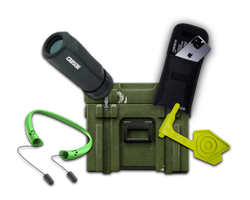
- Lieutenant Tier: This is where we focus on EDC fundamentals. You’ll find high-quality folding knives, fire starters, and basic utility tools that are broadly legal for the entry-level tactician.
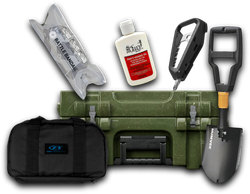
- Captain Tier: Our most popular tier often includes medical kits (IFAKs), advanced lighting solutions, and self-defense tools that balance stopping power with portability.
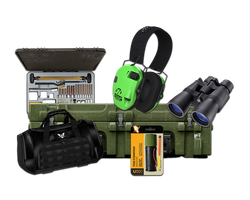
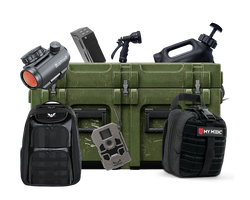
- Major and General Tiers: These are for the experienced operator. We include premium optics, advanced purification systems, and "real issue" tactical gear. This is front-line equipment designed for those who need their gear to perform when there is no backup.
We don't do "sissy stuff." If a tool is in a Crate Club box, it’s because a Spec Ops veteran or military professional has put it through the wringer and confirmed it’s worth the space on your belt. We focus on brands like Gerber, Magpul, and Sig Sauer because they are the industry standards for a reason. See how comparable tools have appeared in Supply Drop - Major XI.
Training: The Software for Your Hardware
Having a legal weapon is useless if you don't know how to deploy it under stress. Training is the "software" that runs your gear. Whether you carry a 2-inch folder or a 2.5-ounce pepper gel, you must practice the "draw and deploy" until it is a subconscious action.
- Muscle Memory: Practice drawing your tool from the exact pocket or holster you use daily. Do this in different clothing, including heavy winter coats and summer t-shirts.
- Scenario Drills: Run through "what if" scenarios. What do you do if your primary hand is pinned? Can you access your tool with your off-hand?
- Legal Education: Laws change. What was legal last year might be a felony this year. Follow resources like the ATF's state law summaries or your state's attorney general page.
Field Note: The best self-defense weapon is your situational awareness. No tool can save you if you are looking at your phone when the threat closes the distance. Use your tactical flashlight to "clear" dark corners and stay ahead of the curve.
Conclusion
Determining what self defense weapons are legal is not a one-time task; it is an ongoing operational requirement. The patchwork of US laws favors those who are informed and disciplined. Start with a solid tactical flashlight and a high-quality pepper gel—these are your most legally resilient options. From there, build out your kit with blades and conducted energy weapons that fit your local statutes.
At Crate Club, we are dedicated to helping you build a kit that is not just "cool," but operational. Our community of tactical enthusiasts and survivalists knows that preparation is a mindset, not a reaction. By staying informed and using field-tested gear, you ensure that you are always the hardest target in the room. Choose your Crate Club subscription to continue building a disciplined, practical loadout.
- Build your foundation with legal EDC essentials.
- Layer your defense with lighting and pepper spray.
- Stay updated on local ordinances for knives and electronics.
- Train until your deployment is instinctive.
Bottom line: Your gear is only as effective as your legal right to carry it. Build a smart, legal loadout and stay ready for whatever comes next.
FAQ
Can I carry pepper spray on an airplane?
You cannot carry pepper spray or any other defensive weapon in your carry-on luggage. However, the TSA (Transportation Security Administration) generally allows one 4-fluid-ounce (118 ml) container of self-defense spray in your checked baggage, provided it has a safety mechanism to prevent accidental discharge. Always check your specific airline's policy, as some may have even stricter rules.
Are stun guns legal in New York City?
While a federal court found the statewide ban on stun guns unconstitutional in 2019, New York City has historically maintained its own restrictive ordinances. Navigating NYC's weapon laws is difficult; even if the state ban is void, local police may still cite or arrest individuals for possession under city-specific codes. It is generally safer to stick with legal-sized pepper spray and tactical flashlights in the five boroughs.
Is it legal to carry an expandable baton for self-defense?
In many states, like California and Massachusetts, expandable batons are strictly prohibited for civilians. In other states, they are legal to own but may require a concealed weapons permit to carry in public. Because they are often classified as "per se" weapons—tools with no purpose other than as a weapon—they are more likely to lead to legal complications than utility-focused gear.
What knife length is legal for EDC?
There is no single federal standard for knife length. However, a blade under 2.5 inches is a "safe" standard that satisfies the laws of most major cities, including Chicago and Boston. Avoiding automatic opening mechanisms (switchblades) and double-edged blades (daggers) will also help you stay compliant with the majority of state-level restrictions.
Share this article