Can You Use a Paintball Gun for Self Defense?
Table of Contents
- Introduction
- The Reality of Paintball Markers as Defensive Tools
- Specialized Less-Lethal Launchers
- The Tactical Advantages of Less-Lethal Air Systems
- Critical Disadvantages and Points of Failure
- Legal Considerations and the "Imitation Firearm" Trap
- Comparison: Paintball Launcher vs. Traditional Firearm
- Building a Tiered Defense Loadout
- Training for Less-Lethal Deployment
- The Role of Crate Club in Your Preparation
- Conclusion
- FAQ
Introduction
Choosing a defensive tool is one of the most critical decisions any prepared citizen makes. For those who aren't ready to carry a firearm or live in jurisdictions where ownership is heavily restricted, the question often arises: can you use a paintball gun for self defense? At Crate Club, we approach gear from a perspective of operational reality—if a tool can’t perform when the adrenaline is red-lining and your life is on the line, it’s a liability, not an asset.
This article explores the technical capability, tactical risks, and legal realities of using paintball markers and specialized less-lethal launchers for personal protection. We will break down the differences between standard paintballs and defensive rounds, the maintenance requirements of air-powered systems, and whether these tools actually stop a threat or just escalate one. While a standard recreational marker is almost never the right choice, specialized less-lethal systems occupy a specific niche in a tiered defense strategy. If you are building a broader defensive setup, review this guide to choosing a self-defense weapon for different situations.
Quick Answer: Technically, you can use a paintball gun for self-defense, but a standard marker with paintballs is highly ineffective and dangerous. Specialized launchers firing pepper balls or kinetic rounds are better, but they still carry significant risks of mechanical failure and legal escalation.
The Reality of Paintball Markers as Defensive Tools
In a high-stress encounter, you need a "stop" — a physiological or psychological event that ceases the attacker's aggressive behavior. A standard paintball gun, designed for recreation, rarely provides this. A .68 caliber paintball travels at roughly 280 to 300 feet per second (FPS). While getting hit on the field hurts, it usually results in nothing more than a welt or a bruise.
When an intruder is fueled by adrenaline or narcotics, a welt is not a deterrent. In many cases, hitting an attacker with a standard paintball will only enrage them, escalating a robbery into a violent assault. Furthermore, the accuracy of a smooth-bore paintball marker is insufficient for the precise shot placement required to hit sensitive areas like the eyes or throat under pressure.
Kinetic Energy vs. Stopping Power
To understand the limitation, we have to look at the energy. A standard paintball has very little mass. When it hits, it is designed to break, which actually dissipates the energy over a larger surface area to prevent injury. In a self-defense scenario, you want the opposite—concentrated force that disrupts the target’s ability to move or see.
Psychological Escalation
One of the greatest dangers of using a paintball marker for defense is that most of them look like real firearms, especially in low light. If you point a realistic-looking marker at an intruder who is carrying a real firearm, they are likely to respond with lethal force. You have now brought a "toy" to a gunfight, and the results are predictably catastrophic.
Specialized Less-Lethal Launchers
When people ask about using a paintball gun for defense, they are often actually referring to less-lethal launchers. These are devices that use the same CO2 or compressed air technology as paintball markers but are specifically engineered for defensive ammunition. Brands like Tippmann, First Strike, and Byrna produce systems that fire specialized projectiles. For a broader look at defensive kits and less-lethal options, read this guide to building a self-defense kit.
Pepper Balls (OC/PAVA)
OC (Oleoresin Capsicum) and PAVA (Pelargonic Acid Vanillylamide) are the active ingredients in pepper balls. These are hard plastic shells filled with a concentrated chemical powder. Upon impact, the shell shatters, creating a cloud of irritant.
- Respiratory Distress: The powder causes immediate coughing and shortness of breath.
- Visual Impairment: It causes involuntary eye closure and intense burning.
- Skin Irritation: The powder reacts with moisture on the skin to cause a stinging sensation.
Kinetic Projectiles
These are solid rounds made of hard rubber, plastic, or even a rubber-steel composite. Unlike paintballs, they do not break on impact. They are designed to deliver a high-velocity "thump" that causes intense pain and can potentially break small bones or cause hematomas.
Grimburg and Riot Balls
In the tactical community, some users look for heavier "riot balls." These are often .68 caliber and significantly heavier than a standard paintball. Fired from a marker with the velocity turned up (if the internals allow it), these can be much more painful than a standard ball. However, the risk of "shoving the threat" rather than stopping it remains high.
Field Note: If you choose a less-lethal launcher, never mix ammunition types in a single magazine. You need to know exactly what the result of your trigger pull will be. A cloud of pepper powder is a different tactical outcome than a kinetic impact.
The Tactical Advantages of Less-Lethal Air Systems
While we generally advocate for the most effective tool available—which is usually a firearm—there are specific scenarios where a less-lethal launcher has merit.
1. No Background Checks or Waiting Periods
In many states, air-powered launchers are not classified as firearms by the ATF (Bureau of Alcohol, Tobacco, Firearms, and Explosives). This makes them accessible to people who live in "may-issue" states or those who are still in the process of obtaining a permit.
2. Standoff Distance
Unlike a handheld pepper spray canister, which usually has a range of 10–15 feet, a launcher like the Tippmann TiPX or the Byrna SD can accurately engage a target at 50–60 feet. This allows the defender to stay behind cover or maintain a safe distance while deploying a deterrent.
3. Lower Liability for Non-Life-Threatening Encounters
There are situations where the threat level is ambiguous—for example, a stray aggressive dog or a trespasser who is acting erratic but hasn't brandished a weapon. In these cases, a less-lethal option allows for a graduated response.
4. High Capacity and Rapid Fire
Most defensive markers use magazines holding 7 to 20 rounds. With a semi-automatic action, you can put a significant amount of "pepper" into the air or multiple kinetic rounds onto a target in seconds.
For those building a layered setup around awareness, medical gear, lighting, and everyday-carry tools, choose your Crate Club tier based on your experience and preparedness goals.
Critical Disadvantages and Points of Failure
Relying on a paintball-style system for life safety requires an understanding of where these systems fail. At Crate Club, we emphasize gear that is "field-ready," and air systems require more maintenance than a standard Glock or Remington.
The CO2 Leak Problem
Most less-lethal launchers use 12-gram CO2 cartridges. These cartridges are held under immense pressure. Over time, the O-rings (rubber seals) in the marker will degrade. If you leave a cartridge "pierced" and ready to fire, the gas will eventually leak out. If you don't leave it pierced, you have to remember to puncture it under stress.
Temperature Sensitivity
CO2 is highly sensitive to temperature. In extreme cold, the pressure drops significantly, leading to lower velocities and potential "burping" of the gas, where the marker fails to cycle. In extreme heat, the pressure can spike, potentially damaging seals.
Accuracy and Velocity
Because these projectiles are spherical and the barrels are typically smooth-bore, they lack the stability of a rifled firearm. Past 20 yards, your "groupings" will open up significantly. If the wind is blowing, a pepper ball cloud may blow back toward you, the defender, instead of the attacker.
Maintenance Cycles
Unlike a firearm that can sit in a safe for a year and still fire, a paintball-style launcher needs regular lubrication and O-ring inspections. You must also cycle your CO2 cartridges regularly to ensure they haven't leaked.
Key Takeaway: A less-lethal launcher is a high-maintenance tool. If you aren't prepared to check the seals and CO2 levels every month, it will likely fail you when you need it most.
For supporting equipment such as flashlights, medical supplies, and compact defensive tools, browse the Gear Shop and build around the launcher rather than relying on it alone.
Legal Considerations and the "Imitation Firearm" Trap
The law regarding paintball guns and less-lethal launchers is a patchwork of state and local regulations. Before you decide to use one for defense, you must understand the legal landscape in your specific area.
Classification as a Weapon
In states like New Jersey and Rhode Island, air guns are often treated similarly to firearms. Using one against a person, even in self-defense, can lead to charges of assault with a deadly weapon if the force is deemed "unreasonable" for the situation.
The California Context
California often classifies these as "imitation firearms." Carrying them in public, in malls, or on public transit is generally illegal. If the tip of the barrel isn't blaze orange, you may face additional legal hurdles.
Defensive Use vs. Aggravated Assault
If you use a paintball gun to "mark" a thief who is running away with your property, you are no longer acting in self-defense. In many jurisdictions, this is considered aggravated assault. Self-defense generally requires an immediate threat of physical harm. Once the threat is fleeing, your legal right to use force—even less-lethal force—often evaporates.
For general subscription questions, tier details, and delivery information, review the Crate Club FAQ before choosing equipment or a membership.
Comparison: Paintball Launcher vs. Traditional Firearm
| Feature | Less-Lethal Launcher | 9mm Handgun |
|---|---|---|
| Stopping Power | Low (Irritant/Pain) | High (Physiological Stop) |
| Lethality | Very Low (Maiming risk) | High |
| Legal Access | Usually No Permit | Requires Permit (Most States) |
| Effective Range | 15-20 Yards | 50+ Yards |
| Maintenance | High (Gas/Seals) | Low (Clean/Oil) |
| Cost of Ammo | High ($2-$5 per ball) | Low ($0.30-$1.00 per round) |
Building a Tiered Defense Loadout
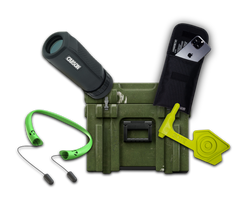
At Crate Club, we believe in being prepared for the full spectrum of threats. A paintball-style less-lethal launcher shouldn't be your only tool, but it might have a place in your overall security plan. For a beginner just getting started, the Lieutenant tier provides the essential EDC (Everyday Carry) tools to handle basic survival and self-defense needs.
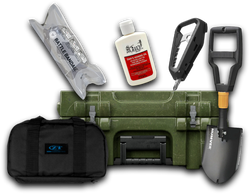
For those looking for a more robust setup, the Captain What's Inside page highlights a higher-value mix of survival tools and medical kits (IFAKs) that are necessary whether you are using a firearm or a less-lethal launcher.
The Graduated Response
- De-escalation: Use your voice and situational awareness to avoid the conflict.
- Deterrence: Bright tactical flashlights, such as those featured in the Major tier, can improve identification and support a graduated response.
- Less-Lethal: Pepper spray or a specialized launcher to create distance.
- Lethal: A firearm as the final resort when life is in immediate danger.
- Medical: An IFAK (Individual First Aid Kit) containing a CAT (Combat Application Tourniquet) and hemostatic gauze to treat injuries after the fight is over.
Bottom line: A paintball gun is a poor primary defense tool, but a purpose-built pepper ball launcher can serve as a gap-filler between a flashlight and a firearm.
Training for Less-Lethal Deployment
If you decide to integrate a launcher into your home defense, you cannot treat it like a toy. You must train with the same discipline as a professional operator. For more guidance on building decision-making, awareness, and equipment habits, read about developing tactical skills for preparedness.
Step 1: Zero Your Marker
Ensure your sights are aligned for the specific distance of your home's longest hallway. Know exactly where the ball will strike at 7, 10, and 15 yards.
Step 2: Practice the Puncture
If your launcher uses a "quick-puncture" system (where the first trigger pull or a button press pierces the CO2), you must practice this until it is muscle memory. Under stress, people often forget this step and pull a "dead" trigger.
Step 3: Clear Malfunctions
Air guns can jam just like firearms. Practice "tap-rack-bang" drills (tapping the magazine, racking the slide/bolt, and re-engaging). Learn how to clear a "chopped" ball where a projectile breaks inside the chamber.
Step 4: Environmental Awareness
Understand how air currents work in your home. If you fire pepper balls in a small hallway, you will be affected by the powder. Have a plan to exit the area or have a mask/ventilation strategy.
The Role of Crate Club in Your Preparation
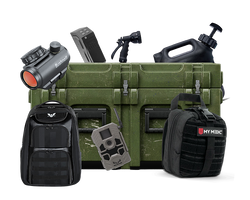
We don't just send you gear; we send you the equipment that our Spec Ops veterans have vetted for real-world utility. Whether you are looking for the best EDC knives from CRKT or Gerber, or advanced tactical lighting from Bushnell or Sig Sauer, our crates are designed to build your capability over time. For examples of compact lighting and first-aid equipment in a past crate, explore Supply Drop Major XIX.
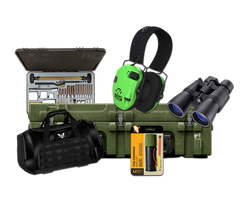
For the serious tactician, the General tier provides the "007" of gear boxes—high-end, mission-ready equipment that often includes tactical self-defense flashlights and premium survival tools. This level of gear is meant for those who understand that when SHTF (the Sh*t Hits The Fan), quality is the only thing that matters.
Conclusion
Can you use a paintball gun for self defense? Yes, but with massive caveats. A standard recreational marker with paintballs is likely to fail, enrage the attacker, or get you shot with a real firearm. However, a purpose-built less-lethal launcher firing pepper balls or kinetic rounds can be an effective part of a tiered defense strategy—provided you understand its mechanical limitations and maintenance requirements.
Preparation is not about having one "perfect" tool; it’s about having a system of skills and gear that allows you to handle any threat. Our mission at Crate Club is to help you build that system by delivering professional-grade, field-tested gear to your door. From basic EDC to mission-critical tactical equipment, we ensure you’re never caught off guard.
Key Takeaway: Don't bring a toy to a life-or-death situation. If you choose less-lethal, choose a dedicated launcher, maintain it religiously, and always have a backup plan.
To start building your tactical loadout with gear picked by the pros, explore the Crate Club subscription tiers.
FAQ
Is it legal to use pepper balls for home defense?
In most US states, pepper balls (OC/PAVA) are legal for civilian self-defense, but some states like California, New York, and Massachusetts have specific restrictions on the sale or shipment of chemical irritants. Always check your local and state statutes before purchasing or carrying these products, as laws regarding imitation firearms and chemical irritants vary significantly.
Will a paintball gun stop an intruder who is on drugs?
A standard paintball gun is unlikely to stop an intruder who is under the influence of narcotics or experiencing a high-adrenaline state, as they may not feel the pain of the impact. A specialized pepper ball launcher is more effective because it attacks the respiratory system and eyes, creating a physiological response that is harder to ignore than simple pain.
Can I leave a CO2 cartridge in my paintball gun for defense?
Most experts recommend against leaving a CO2 cartridge "pierced" in a standard marker for long periods because the pressure will eventually degrade the O-rings and lead to a leak. If you use a launcher for defense, look for models with "quick-pierce" technology that keeps the cartridge sealed until the moment you need to fire.
What is the best ammunition for a self-defense paintball gun?
The most effective ammunition types for less-lethal defense are pepper balls, which release a chemical irritant, and solid kinetic rounds made of hard rubber or plastic. Standard paintballs are intended for recreation and lack the stopping power or chemical deterrent necessary for a real-world defensive encounter.
Share this article