How to Carry EDC Gear for Maximum Efficiency and Access
Table of Contents
- Introduction
- The Three-Layer Carry System
- Pocket Organization: The Science of the Draw
- The Belt: Your Load-Bearing Foundation
- Bag Carry: Expanding Your Capability
- Weight Distribution and Comfort
- Consistency and Muscle Memory
- Professional Gear for the Mission
- Summary Checklist for Carrying EDC Gear
- Conclusion
- FAQ
Introduction
You are standing in a pitch-black stairwell during a power failure, or perhaps you are on the side of the road with a blown radiator hose and 20 miles of dead air between you and the nearest town. In that moment, your gear is only as good as your ability to reach it. If your flashlight is buried at the bottom of a stuffed backpack or your blade is clipped in a way that requires two hands to deploy, you have already failed the first test of preparedness.
At Crate Club, we know that carrying gear is not just about what you own. It is about how you stage it. We have spent years in the field, from combat zones to remote wilderness, testing how gear rides on the body and under pressure. This guide covers the fundamentals of everyday carry (EDC) — the curated collection of tools you keep on your person daily — and how to organize that loadout for speed, comfort, and reliability. We will break down the three-layer carry system and show you how to turn a collection of gadgets into a professional-grade kit. If you are building your first setup, start by reviewing this guide to essential EDC gear.
Quick Answer: Effective EDC carry relies on a tiered system: high-access items in pockets, support gear on the belt, and sustained-use items in a bag. Maintain consistency in placement to build muscle memory and distribute weight evenly to prevent fatigue.
The Three-Layer Carry System
Professional operators do not just shove gear into their pockets. They use a tiered system. This ensures that the most critical tools are always within reach, while heavier or less-used items are staged in secondary locations. This approach is also known as the three-line tactical gear system.
The First Line: On-Body Pockets
This is your immediate-response gear. If you are separated from your bag or vehicle, this is what you have to survive and work with. It includes your phone, wallet, keys, a dedicated folding knife, and a high-output flashlight. These items must be accessible with one hand and placed in the same spot every single day to build muscle memory.
The Second Line: The Belt
Your belt is the foundation of your carry system. It supports the weight of a concealed carry weapon (CCW), multi-tools, or a compact Individual First Aid Kit (IFAK). An IFAK is a specialized medical kit containing life-saving supplies like tourniquets and pressure bandages. Gear on the belt is more secure than gear in a pocket, but it requires a high-quality, stiff tactical belt to prevent sagging.
The Third Line: The Bag
Whether it is a sling bag or a 72-hour backpack, the third line holds your "sustainment" gear. This includes power banks, extra water, a full-sized medical kit, and weather-specific clothing. The bag allows you to expand your capabilities without overloading your pockets. For a deeper look at organized load-bearing storage, see this guide to tactical kit bags.
Key Takeaway: Don't try to fit everything in your pockets. Use a tiered system to prioritize access and manage weight across your pockets, belt, and bag.
Pocket Organization: The Science of the Draw
Your pockets are prime real estate. If you clutter them with receipts and loose change, you lose the ability to deploy a tool when seconds count. A dedicated EDC tool kit can help you decide which items deserve space on your person.
Strong Side vs. Weak Side
Your "strong side" is the side of your dominant hand. This pocket should be reserved for your primary cutting tool. Most tactical folding knives feature a pocket clip. Position the knife so the spine of the blade is against the seam of your pocket. This prevents the blade from opening accidentally and ensures your fingers land on the deployment mechanism as you draw.
Your "weak side" pocket is for your flashlight. In a defensive or search situation, you want your light in your non-dominant hand so your dominant hand is free to use a tool or clear obstacles. Carry a light with a tail-cap switch for intuitive operation. Learn more about selecting and positioning an EDC flashlight.
Managing the "Pocket Bulge"
To avoid looking like a "gear show pony," use slim, minimalist wallets. Traditional bifold wallets are thick and contribute to back pain if sat upon. Modern metal or high-strength polymer wallets keep your cards secure and your profile low. If you carry multiple small items like a pen and a small multi-tool, consider a pocket organizer. This is a small sleeve that keeps items vertical and prevents them from bunching at the bottom of your pocket.
Field Note: Carry your keys on a dedicated clip or key organizer. This stops the "jingle" that gives away your position and prevents keys from scratching your phone screen or poking through your pocket lining.
The Belt: Your Load-Bearing Foundation
You cannot carry a serious loadout on a cheap leather belt. If you are carrying a multi-tool, a spare mag, or a CCW, you need a belt designed for the task. Compare individual EDC tools and carry gear when refining your setup.
Stiffness and Support
A proper tactical belt has a reinforced core. This prevents the belt from twisting under the weight of a holster. When the belt stays rigid, the gear stays in the exact same orientation. This is critical for a consistent draw. We often see beginners struggle with their gear because their belt is too soft, causing their holster to "cant" or lean outward.
Belt Staging
Most operators prefer to keep the front of the belt clear for mobility. Stage your multi-tool or spare magazine carriers at the 10 o’clock or 2 o’clock positions (referring to the belt as a clock face, with 12 being the buckle). If you carry a fixed-blade knife, an "inside the waistband" (IWB) carry at the 4 o’clock position offers the best balance of concealment and access.
Note: If you carry a tourniquet (TQ), it should be the most accessible item on your belt. A CAT (Combat Application Tourniquet) should be staged in a dedicated holder that allows for rapid, one-handed deployment.
Bag Carry: Expanding Your Capability
When your daily routine takes you further from home or into more hazardous environments, a bag becomes necessary. However, a bag can become a "black hole" if not organized correctly. Use organized bag-carry methods to keep high-priority items easy to reach.
Slings vs. Backpacks
For urban EDC, a sling bag is often superior to a backpack. You can rotate a sling to the front of your body without taking it off, giving you immediate access to your gear while on the move. Backpacks are better for heavy loads or long-distance movement because they distribute weight across both shoulders.
Modular Pouch Systems
Never throw loose items into the main compartment of a bag. Use a modular system with color-coded pouches.
- Red Pouch: Medical and first aid.
- Black/Coyote Pouch: Tools and electronics.
- Blue Pouch: Water purification and fire starters.
Using a MOLLE (Modular Lightweight Load-carrying Equipment) system allows you to attach these pouches to the interior or exterior of your bag securely. This ensures that when you reach into your bag, you aren't hunting for a cable; you are grabbing a specific pouch.
Bottom line: Organization in a bag is about "containment." Use pouches to categorize gear so you can find what you need without looking.
Weight Distribution and Comfort
Fatigue is the enemy of preparedness. If your gear is uncomfortable, you will eventually stop carrying it.
Balance the Load. If you have a heavy multi-tool and a phone in your right pockets, put your flashlight and a spare mag in your left. This prevents your pants from sagging to one side and keeps your gait natural.
Check the "Seat Test." Before committing to a carry position, sit down in a chair and a vehicle. A flashlight that feels fine while standing might dig into your hip while driving. Adjust your gear until it is comfortable in all positions.
Avoid Overloading. The biggest mistake in EDC is carrying gear "just because." If you haven't used a tool in six months and it serves no emergency purpose, ditch it. Every ounce counts when you are on your feet all day.
Consistency and Muscle Memory
In a high-stress situation, your fine motor skills will degrade. You will not be able to think through where you put your lighter or how your knife opens.
You must carry your gear in the exact same location every day.
- Uniformity: Use the same pocket for the same tool across different pairs of pants.
- Dry Practice: Practice drawing your knife, light, and multi-tool. Do this until the movement is fluid and automatic.
- The "Pat Down": Every time you leave a building or a vehicle, do a quick physical check of your core items (phone, wallet, keys, knife, light).
Field Note: Practice your draw in the dark. If you can't find your light or blade without looking, your carry system needs adjustment.
Professional Gear for the Mission
Building a reliable EDC kit takes time and testing. You don't want "sissy stuff" that breaks the first time you put torque on a screw or drop it on the pavement. You need gear from brands that operators trust, like Gerber, Magpul, and Sig Sauer.
This is exactly why we created the different tiers at Crate Club. We do the field testing so you don't have to.
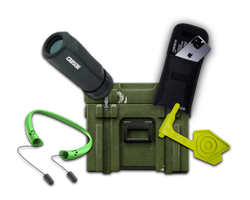
- Lieutenant Tier: This is for the guy just starting out. It focuses on the essentials: fire starters, EDC tools, and basic survival gear. Explore what comes in the Lieutenant tier.
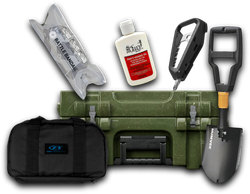
- Captain Tier: Our most popular option. It steps up the quality with better medical kits, EDC packs, and more robust self-defense tools. See what's inside the Captain crate.
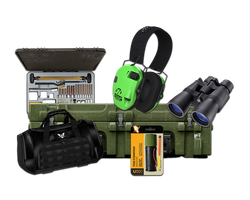
- Major Tier: For the experienced tactician who wants premium discovery, including high-end optics and advanced purification systems. Review the Major tier contents.
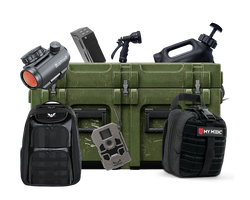
- General Tier: This is the peak of tactical gear. We’re talking custom bulletproof bag inserts, professional-grade binoculars, and front-line equipment. Explore what comes in the General tier.
Every piece of gear in our crates is hand-picked by Spec Ops veterans. We don't do filler. We provide the tools you need to stay a step ahead, whether you are on duty or just taking care of your family.
Bottom line: Quality gear is an investment in your own capability. Don't settle for cheap imitations that fail when SHTF (Short Hand for "Situational Crisis").
Summary Checklist for Carrying EDC Gear
- Pockets: Stage knife on strong side, light on weak side. Use a minimalist wallet.
- Belt: Use a stiff, reinforced belt. Keep medical gear (TQ) highly accessible.
- Bag: Use pouches to organize. Slings for access, backpacks for weight.
- Consistency: Keep every item in the same spot daily to build muscle memory.
- Maintenance: Check your batteries once a week and keep your blades honed.
Conclusion
How you carry your EDC gear is just as important as the gear itself. A well-organized system reduces the friction of daily life and provides a tactical advantage in an emergency. Start with the basics: get your pockets dialed in, invest in a quality belt, and organize your bag with a modular mindset.
Remember, preparation is a lifestyle, not a hobby. The more you practice with your kit, the more capable you become. If you want to skip the guesswork and start building a world-class gear collection, choose your Crate Club subscription. We deliver the gear the pros use, vetted by people who have been there.
Bottom line: Carry with purpose, train with consistency, and never settle for gear that isn't field-tested.
FAQ
What is the best way to carry a knife for EDC?
The best way is clipped to the inside of your dominant-side front pocket with the blade's spine against the pocket seam. This ensures the knife is always in the same orientation for a quick, one-handed draw while preventing accidental opening.
Should I carry a multi-tool in my pocket or on my belt?
If the multi-tool is small and lightweight, a pocket organizer can keep it vertical and accessible. However, for full-sized multi-tools, a belt sheath is preferred to save pocket space and provide better weight distribution.
How do I stop my EDC gear from being too bulky?
To reduce bulk, switch to a minimalist wallet, use pocket organizers to prevent items from bunching, and move secondary items (like large power banks or full medical kits) to a sling bag or backpack.
Is an EDC bag necessary if I have large pockets?
Large pockets can hold a lot of gear, but they don't offer the organization or weight distribution of a bag. A bag is necessary for carrying sustainment items like water, extra power, and comprehensive medical supplies that would be too heavy or awkward for on-body carry.
Share this article