What is the M4 Carbine: The Operator’s Definitive Guide
Table of Contents
- Introduction
- The Evolution of the M4 Platform
- Technical Specifications and Mechanics
- M4 vs. M4A1: Knowing the Difference
- The M4 Carbine vs. the Civilian AR-15
- Modularity and the SOPMOD Ecosystem
- The M4 in a Survival and Preparedness Context
- Maintenance: Keeping the Carbine in the Fight
- The M4's Place in Modern History
- Building Your Loadout
- Conclusion
- FAQ
Introduction
Whether you are clearing a room in a high-stress Close Quarters Battle (CQB) scenario or patrolling a rural perimeter, your primary weapon system is your lifeline. For the modern American warfighter and the prepared citizen alike, that system is almost always a variation of the M4 Carbine. It is the most ubiquitous tactical firearm in the world, having seen decades of service in every climate and conflict imaginable. At Crate Club, we understand that professional-grade gear starts with a deep understanding of the tools that set the standard in the field. This guide breaks down the history, technical specifications, and real-world performance of the M4 Carbine. We will explore why this platform remains the gold standard for tactical operations and how it differs from its civilian counterparts. By the end of this article, you will understand the mechanics and the legacy of the weapon that defined a generation of combat.
If you are building a broader preparedness setup around your rifle, explore tactical loadouts and the gear they require.
Quick Answer: The M4 Carbine is a lightweight, gas-operated, air-cooled, magazine-fed, selective-fire firearm with a 14.5-inch barrel and a collapsing stock. It is the primary infantry weapon for the U.S. Armed Forces, chambered in 5.56x45mm NATO, and designed for versatility in both close-quarters engagement and medium-range combat.
The Evolution of the M4 Platform
The story of the M4 Carbine does not start in a vacuum; it is the result of decades of combat feedback and engineering refinements. To understand the M4, you must first look at the M16. During the Vietnam War, the U.S. military adopted the M16, a full-length rifle with a 20-inch barrel. While effective in open terrain, the long barrel was cumbersome in dense jungle and during vehicle operations.
The military began experimenting with "carbine" versions—shorter, more compact rifles—almost immediately. The XM177 "Colt Commando" was an early attempt to provide Special Operations forces with a shorter weapon. However, these early versions suffered from reliability issues and excessive muzzle blast. Throughout the 1980s, the requirement for a standardized, reliable, and compact rifle grew.
In 1994, the M4 Carbine was officially entered into service. It was essentially a shortened version of the M16A2. It shared approximately 80% of its parts with the M16A2, which made logistics easier for the military. The primary difference was the 14.5-inch barrel and the four-position telescoping buttstock. This allowed soldiers to adjust the length of pull (the distance from the trigger to the back of the stock) to accommodate body armor and different shooting positions.
For more historical context, read the history of when the M4 Carbine was made.
The M4 was initially intended for non-infantry troops, such as vehicle crews and radio operators, who needed a compact defensive weapon. However, as the nature of warfare shifted toward urban environments and rapid deployment, the M4's portability made it the preferred choice for front-line infantry. By the early 2000s, it had largely replaced the M16 in active combat units.
Technical Specifications and Mechanics
The M4 Carbine is a marvel of modular design. Its performance is rooted in a set of specific technical characteristics that balance weight, size, and lethality.
The Direct Impingement System
The M4 operates on a Direct Impingement (DI) gas system. When a round is fired, high-pressure gas is bled off through a small port in the barrel. This gas travels through a tube directly back into the upper receiver, where it strikes the bolt carrier group (BCG). This force pushes the BCG rearward, extracting the spent casing, cocking the hammer, and compressing the recoil spring. The spring then pushes the BCG forward, stripping a fresh round from the magazine and chambering it.
While some modern rifles use a piston system, the DI system is lighter and has fewer moving parts. The drawback is that it directs carbon and heat directly into the action, which requires the operator to maintain a strict cleaning and lubrication schedule.
For broader maintenance guidance, review this tactical firearm maintenance resource.
Barrel and Ballistics
The standard M4 barrel is 14.5 inches long with a 1:7 twist rate. This twist rate is optimized for stabilizing heavier 5.56x45mm NATO projectiles, such as the 62-grain M855 or the 77-grain Mk262. The barrel features a "Government profile," which includes a cutout for mounting an M203 grenade launcher.
Because the barrel is shorter than the 20-inch barrel of the M16, the M4 has a slightly lower muzzle velocity. This reduces the effective range of the weapon compared to a full rifle, but for most tactical engagements—which occur within 300 meters—the difference is negligible.
For a deeper look at the platform’s ammunition, read this guide to the M4’s 5.56x45mm NATO caliber.
Furniture and Ergonomics
The M4 introduced several ergonomic improvements over older platforms:
- Collapsing Stock: Allows for rapid adjustment based on the shooter's gear or size.
- Flat-Top Upper Receiver: Replaced the fixed carrying handle with a MIL-STD-1913 Picatinny rail, allowing for the easy mounting of optics.
- Handguards: Original models used plastic handguards, but these were quickly replaced by the Rail Interface System (RIS), allowing for lights, lasers, and vertical grips.
If you are beginning to assemble your supporting equipment, choose a Crate Club tier that matches your preparedness goals.
Field Note: In the field, the direct impingement system is highly reliable as long as it is kept wet. "Wet" means generous application of high-quality lubricant on the bolt carrier group friction points. In sandy environments, you may need to wipe away excess grime, but never run an M4 bone-dry if you expect it to cycle reliably under high volumes of fire.
M4 vs. M4A1: Knowing the Difference
In tactical circles, you will often hear people use "M4" and "M4A1" interchangeably, but there are distinct differences between the two. These differences matter because they reflect the evolving needs of the operator.
Selective Fire Modes
The original M4 featured "S-1-3" firing modes: Safe, Semi-automatic, and 3-round Burst. The burst fire was intended to prevent soldiers from wasting ammunition under stress. However, the burst mechanism led to an inconsistent trigger pull, which affected accuracy.
The M4A1, which eventually became the standard across the military, replaced the 3-round burst with a full-auto setting ("S-1-F"). This allows for sustained suppressive fire when necessary, though most professional operators still rely almost exclusively on semi-automatic fire for precision and ammo conservation.
The Heavy Barrel
The M4A1 also introduced a thicker, heavier barrel profile under the handguards. This was designed to handle the heat generated by full-auto fire and to reduce the risk of a "cook-off" (where a round in the chamber ignites from barrel heat) during intense firefights. The heavy barrel also slightly improves accuracy by reducing barrel whip during the firing cycle.
The SOPMOD Program
The M4A1 is the primary platform for the Special Operations Peculiar Modification (SOPMOD) program. This is not a single piece of gear but a kit of accessories that allow operators to configure their weapons for specific missions. This includes items like the Trijicon ACOG (Advanced Combat Optical Gunsight), EOTech holographic sights, and suppressors.
For optic and accessory ideas, browse the Crate Club Gear Shop.
The M4 Carbine vs. the Civilian AR-15
For many civilians and preppers, the M4 is the look they want to emulate, but there are critical legal and mechanical differences between a "real" M4 and a civilian AR-15.
For a more detailed overview, read this guide to civilian M4 ownership and federal restrictions.
Legal Definition and Barrel Length
Under the National Firearms Act (NFA), any rifle with a barrel shorter than 16 inches is considered a Short-Barreled Rifle (SBR). Since the military M4 has a 14.5-inch barrel, a civilian version must either be registered as an SBR with the ATF or have a muzzle device permanently "pinned and welded" to the barrel to bring the total length to 16 inches.
Trigger Mechanics
A true M4 is a "machine gun" by legal definition because it has a selective-fire trigger group. Civilian AR-15s are semi-automatic only. While they may look identical on the outside, the internal machining of the lower receiver and the design of the bolt carrier group are different to prevent the easy installation of full-auto components.
Quality Standards
Military M4s must meet strict "Mil-Spec" standards, which include High-Pressure Testing (HPT) and Magnetic Particle Inspection (MPI) of the bolt and barrel to ensure there are no microscopic cracks. When building or buying a civilian carbine for serious use, savvy preppers look for these same markings to ensure their gear is up to the task.
Key Takeaway: The M4 Carbine is a military-issue selective-fire weapon with a 14.5" barrel. The civilian AR-15 is its semi-auto counterpart, usually requiring a 16" barrel to comply with federal law without extra tax stamps. For a reliable defensive tool, focus on "Mil-Spec" components like an MPI-tested bolt.
Modularity and the SOPMOD Ecosystem
The M4's greatest strength is its modularity. It is essentially a "Lego kit" for adults. This adaptability allows the platform to excel in various roles, from a 0-50 meter room-clearing tool to a 500-meter designated marksman rifle.
Optics and Aiming Systems
The transition from iron sights to red dot sights (RDS) and Low Power Variable Optics (LPVO) has changed how the M4 is used. A red dot like the Aimpoint CompM4 allows for "both eyes open" shooting, which is essential for maintaining situational awareness in a fight. For longer-range engagements, an LPVO (1-6x or 1-8x magnification) provides the versatility to identify targets at distance while still being usable at close range.
For a deeper look at sighting equipment, read how holographic sights support faster target acquisition.
Suppressors
Modern tactical doctrine has moved toward the universal use of suppressors. On an M4, a suppressor reduces muzzle flash, protects the shooter’s hearing, and makes communication within a team much easier. However, adding a suppressor increases backpressure, which can cause the rifle to cycle faster and wear out components more quickly. This is often mitigated with an adjustable gas block or a heavier buffer weight.
The Role of High-Quality Accessories
In our Captain and Major tiers, we often see accessories that complement this platform—items like high-lumen weapon lights, durable slings, and specialized cleaning tools. A weapon system is only as good as its weakest link. If you have a $2,000 carbine but use a cheap, non-breathable sling or an unproven optic, you have compromised the entire system.
For higher-level equipment, see what comes inside the Major tier.
The M4 in a Survival and Preparedness Context
For the serious prepper, the M4-style carbine is the logical choice for a primary defensive long gun. There are three main reasons why this platform wins every time:
- Parts Availability: Because the AR-15/M4 platform is the most popular rifle in America, parts are everywhere. If your extractor breaks or a spring loses its tension during a long-term SHTF (S*** Hits The Fan) scenario, you can easily find replacements.
- Ammunition Commonality: The 5.56x45mm NATO (and its civilian .223 Remington counterpart) is the most widely produced centerfire rifle cartridge in the country. In a crisis, this is the ammo most likely to be available through trade or scavenging.
- Ease of Use: The M4 is lightweight and has very low recoil. This makes it an ideal choice for smaller-statured individuals or family members who may not have extensive firearms training.
Essential M4 Spare Parts Kit:
- Bolt Carrier Group (BCG): The heart of the rifle; always have a spare.
- Firing Pin: Small, easy to lose, and critical.
- Extractor and Springs: High-wear items that can cause failure to extract.
- Gas Rings: These ensure the gas system stays sealed; check them by seeing if the BCG can stand upright on the bolt without collapsing.
- Trigger Springs: Rarely fail, but cheap and vital.
For a broader preparedness checklist, explore what tactical loadouts should include.
Bottom line: The M4 platform’s modularity and parts commonality make it the ultimate choice for both professional tactical use and long-term emergency preparedness.
Maintenance: Keeping the Carbine in the Fight
A dirty M4 is a malfunction waiting to happen. Because the Direct Impingement system blows carbon directly into the action, carbon buildup can eventually slow down the bolt carrier group enough to cause a failure to feed or a "short stroke."
Field Stripping
Field stripping an M4 is straightforward and requires no tools. By pushing out the rear take-down pin, the rifle hinges open. Removing the charging handle and BCG allows you to inspect the bore and clean the action.
Lubrication Points
You don't need to soak the entire rifle in oil. Focus on the "rails" of the bolt carrier—the four raised surfaces that actually touch the inside of the upper receiver. Also, apply oil to the bolt cam pin and the gas rings. In a pinch, any high-quality motor oil will work, but dedicated tactical lubricants are designed to stay in place even under high heat.
For maintenance tools and other supporting equipment, shop the individual gear collection.
Inspecting for Wear
Operators should regularly check for "clamshelling" on the gas rings and inspect the bolt lugs for any signs of cracking. The M4 is a rugged tool, but like any machine, it has a service life. Most high-quality bolts should be replaced every 5,000 to 10,000 rounds as a preventative measure.
The M4's Place in Modern History
The M4 Carbine has been the constant companion of the American soldier for over a quarter-century. It has transitioned from a specialized tool for elite units to the standard-issue rifle for every branch of the military. Its design has influenced almost every modern tactical rifle that has followed.
While the military is currently looking at the Next Generation Squad Weapon (NGSW) to replace the M4 with a higher-pressure 6.8mm round, the M4 will likely remain in service with support units and law enforcement for decades to come. Its legacy is one of adaptability. It proved that a single platform could work from the mountains of Afghanistan to the streets of Iraq.
For those of us in the tactical community, the M4 is more than just a firearm; it is a symbol of American engineering and combat effectiveness. Whether you carry one professionally or keep a civilian version for home defense, understanding the "why" behind its design makes you a more capable operator.
Building Your Loadout
Owning an M4-style carbine is only the first step. To truly "unleash your inner operator," you need to build a complete system around the weapon. This includes a robust belt setup, a plate carrier or chest rig for carrying extra magazines, and a medical kit (IFAK) to treat injuries in the field.
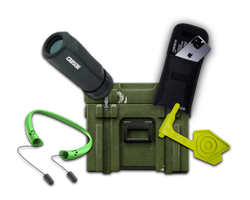
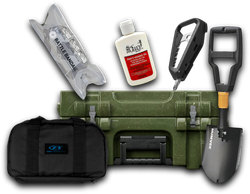
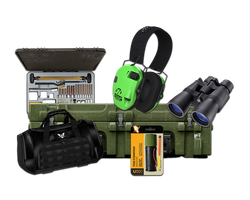
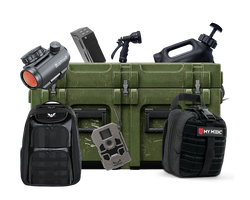
We see a lot of gear come through our crates, from Magpul magazines to Sig Sauer optics and Gerber multi-tools. These are the brands that pros rely on because they don't fail when the stakes are high. If you are just starting your journey, the Lieutenant tier provides the foundational EDC (Everyday Carry) tools you need. For those looking to fully kit out an M4 platform, our Major and General tiers offer the premium optics, lights, and survival gear that match the caliber of a professional weapon system.
The M4 is a tool of precision. Treating it with the respect it deserves—through proper training, maintenance, and high-quality accessories—ensures that when you need it, it will perform.
Conclusion
The M4 Carbine is the quintessential modern combat rifle. It balances compact dimensions with sufficient lethality, all while providing a platform that can be tailored to any mission. From its origins as a specialized tool for Spec Ops to its current status as the primary infantry weapon of the United States, it has proven itself in every corner of the globe. Understanding its mechanics, its limitations, and its requirements is essential for anyone serious about tactical preparedness.
At Crate Club, we believe in providing the gear that matches the standards of the professionals who carry the M4. Our mission is to ensure you have the vetted, field-tested tools you need to stay ready for any scenario. Whether you are refining your EDC or building a Tier-1 loadout, choose the Crate Club subscription that fits your mission.
Bottom line: The M4 is a proven, reliable, and highly modular platform that remains the benchmark for tactical rifle performance in the 21st century.
- Next Step: Ensure your carbine is equipped with a reliable optic and a two-point sling.
- Next Step: Practice field stripping and lubricating your BCG until it becomes muscle memory.
- Next Step: Browse the Crate Club Gear Shop for professional-grade maintenance kits and weapon accessories.
FAQ
Is the M4 Carbine legal for civilians to own?
A true military M4 is a selective-fire weapon (capable of burst or full-auto) and is heavily restricted under the National Firearms Act (NFA), making it nearly impossible for the average civilian to own. However, semi-automatic civilian versions, commonly called AR-15s, are legal in most states, provided they meet barrel length requirements or are registered as Short-Barreled Rifles (SBRs).
For additional context, review this civilian M4 legal overview.
What is the effective range of an M4 Carbine?
The M4 is generally considered to have an effective range of about 500 meters for a point target and 600 meters for an area target. However, in most practical tactical applications, it is most effective within 300 meters, where the 5.56mm round maintains enough velocity for reliable fragmentation and terminal performance.
Can an M4 Carbine fire both .223 Remington and 5.56 NATO ammo?
Yes, a rifle chambered in 5.56x45mm NATO can safely fire both 5.56 NATO and .223 Remington ammunition. However, the reverse is not always true; firing high-pressure 5.56 NATO rounds in a rifle specifically chambered only for .223 Remington can lead to dangerous pressure spikes and should be avoided unless the barrel is marked for both or for "223 Wylde."
For more caliber information, read the M4 ammunition and ballistics guide.
Why does the M4 have a 14.5-inch barrel instead of 16 inches?
The 14.5-inch barrel was chosen by the military to provide the best balance between compactness for vehicle operations and CQB while still maintaining enough muzzle velocity for effective medium-range engagements. For civilians, the 16-inch barrel is the standard to avoid the NFA requirement for a Short-Barreled Rifle tax stamp, unless they choose a "pinned and welded" muzzle device to reach the legal length.
Share this article